
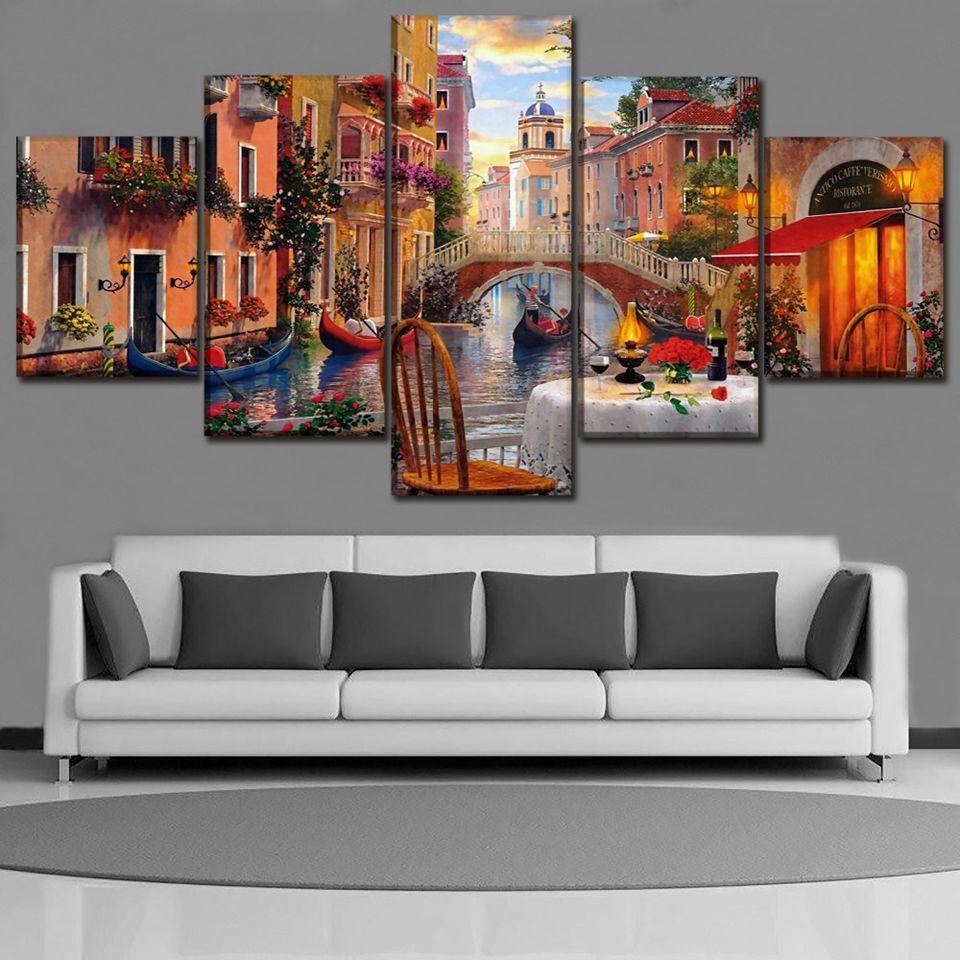
Multi-panel art in a narrow room should be chosen from the viewpoints people actually use, not only from directly in front of the wall. A five-panel composition may look balanced in a product image yet be difficult to see as a whole from a close sofa or hallway approach.
For a September room refresh, start with the route through the space. You may find that the end wall suits a complete image better than the longest wall, or that a smaller arrangement leaves the room easier to use. This is a layout choice, not a rule that narrow rooms need one particular art style.
Walk the room before measuring the wall
Stand at the entrance, sit in the usual chair and walk toward the far end. Note where your attention naturally goes. A picture behind an open door or partly hidden by a tall cabinet may not get the view you expect.
Photograph those ordinary viewpoints. Do not use a wide-angle room image as your only reference, because it can make the available space appear different from everyday experience.
Keep switches, vents and furniture access out of the proposed arrangement. A print should not require moving an everyday chair into a circulation route to make the composition visible.
Test the whole arrangement on paper
Use the dimensions for the exact selected set and establish whether the stated overall size includes spaces between panels. This distinction matters more than the width of one piece.
Mark out paper shapes on an appropriate surface using a method that will not damage it. View the arrangement from the entrance and from the seat nearest it. If the side panels disappear from comfortable view, try another position or size before ordering.
The Venice Restaurant five-panel set and Grand Lion Howl set offer different subjects. Compare where the main subject sits within the entire design, not just the number of panels.
Decide what the room should emphasize
An end-wall composition can create a destination in the room; an arrangement beside a dining table may instead belong to that furniture zone. These are design options, not promises to make the room physically larger.
Choose the option that makes sense with the furnishings you intend to keep. If the room already contains several strong patterns, you may prefer the artwork to repeat one color rather than add another busy element.
Avoid splitting a continuous scene across unrelated walls simply to fit all the panels. If you like that unconventional arrangement, visualize it first; do not assume the original scene will remain readable.
Check the finished installation requirements
Confirm what arrives framed or unframed and choose hardware suited to the actual wall and weight. Product mockups do not establish which fixings are included. Follow supplied instructions or consult an appropriate installer when the wall construction is uncertain.
Our five-piece hanging guide covers the next stage. First settle the viewing problem. A composition that fits numerically but can only be appreciated from a position no one uses is not yet the right fit for the room.